
With aging, changes in the appearance of the face and neck are inevitable for everyone. Skin sagging, loss of soft tissue volume, and loosening of the neck muscles are common signs of aging in both women and men. However, the structure of the skin, muscles, and facial features differs significantly between the two sexes, and this leads to different aging patterns and, consequently, different approaches to facelift surgery.
Anatomical Differences Between Women and Men
Men’s skin is generally thicker than women’s skin. The presence of facial hair follicles and a higher density of sebaceous glands gives male skin greater resistance to wrinkles and causes the aging process to occur more slowly. In contrast, women’s skin is thinner and, due to hormonal changes, loses its elasticity at an earlier stage.
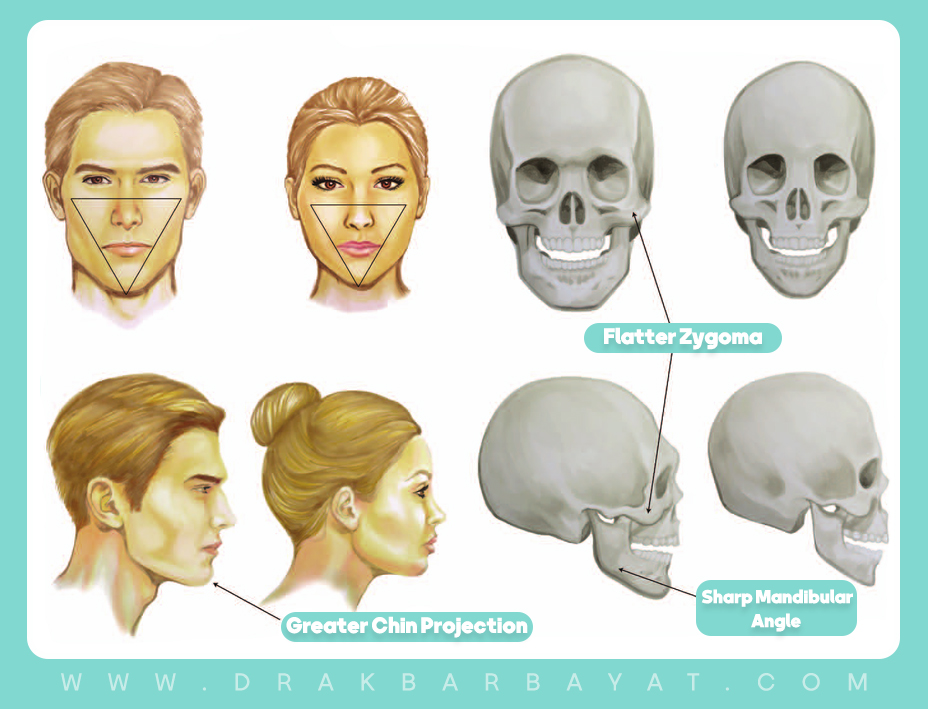
Additionally, the facial skeleton in men is more prominent, with a more defined jawline. Their muscles are bulkier, and the volume of fatty tissue is lower. In women, the soft tissues are usually fuller, the skin is thinner, and the resulting wrinkles are more delicate. These structural differences to some extent influence the planning and execution of facelift surgery in the two sexes.
Differences in the Aging Pattern
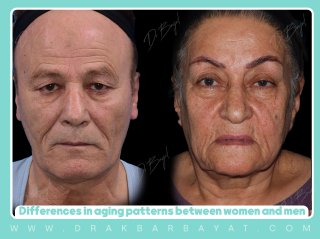
In women, skin sagging usually begins around the eyes, cheeks, and mouth, and smile lines and folds beside the lips tend to appear earlier. In men, changes are more commonly seen in the lower part of the face and the upper neck. Loosening of the skin under the chin, loss of a well defined jawline, and fat accumulation in this area are among the most prominent signs of aging in men.
An important point is that men with a smaller lower jaw or a shorter neck tend to develop signs of neck aging earlier than others. In such individuals, the need for surgical intervention may be felt at a younger age.
Differences in Incision Design and Surgical Technique
Differences in Aesthetic Goals
In facelift surgery for women, the primary goal is to restore the softness, delicacy, and youthful contours of the face. In men, however, the focus is more on preserving masculine features such as a defined jawline, a firm neck, and a natural appearance without obvious signs of surgery.
For this reason, surgical techniques in men often aim for results that appear less “operated,” whereas in women, more noticeable and visible changes may be desired.
In some cases, the use of jaw or chin implants in men can enhance the effects of a facelift, as they help redefine masculine facial lines.

Differences in Recovery and Aftercare
Due to the higher prevalence of high blood pressure in men, the likelihood of bruising and swelling is slightly greater compared to women. However, facial hair growth can help conceal some bruising. In women, the skin is generally thinner and more sensitive, requiring more meticulous care.In both sexes, adherence to postoperative instructions has a direct impact on the final outcome.recovery period and yields more natural looking changes to the face.
Contact us via WhatsApp for offline consultation.
Differences in Results and Longevity
In terms of longevity, there is no significant difference between facelift results in women and men. However, skin quality, lifestyle, and postoperative care all influence how long the results last. In men, due to thicker skin and less tension applied during lifting, the outcome may appear more stable and natural. In women, the softer and more delicate skin makes the results more visible, though they may be slightly less long lasting.

Conclusion and Dr. Bayat’s Perspective
Despite the overall similarities in rejuvenation principles, facelift surgery in women and men must be designed with different approaches. Anatomical characteristics, aging patterns, and aesthetic standards differ between the two sexes, and surgical success is achieved only when these differences are carefully considered.
In my experience, men usually seek facelift surgery at an older age and often desire a natural result that makes them look younger without obvious signs of surgery. In contrast, women tend to prefer a smoother, fresher appearance with more noticeable changes.
Ultimately, the main goal of face and neck lift surgery is to restore balance and youth in harmony with each individual’s facial identity. Precise planning, appropriate technique selection, and a deep understanding of the subtle differences between male and female faces are the keys to achieving natural and long lasting results.