
Rhinoplasty
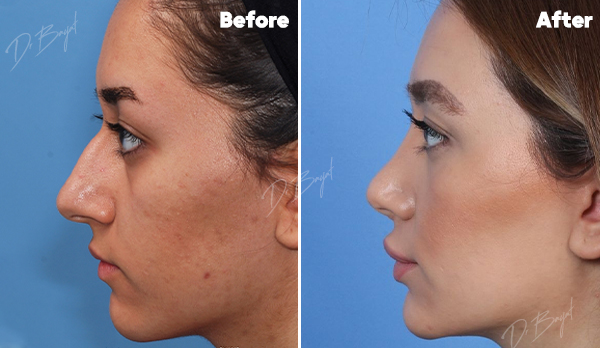
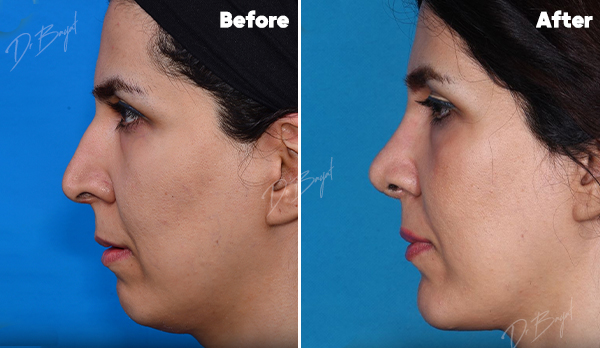
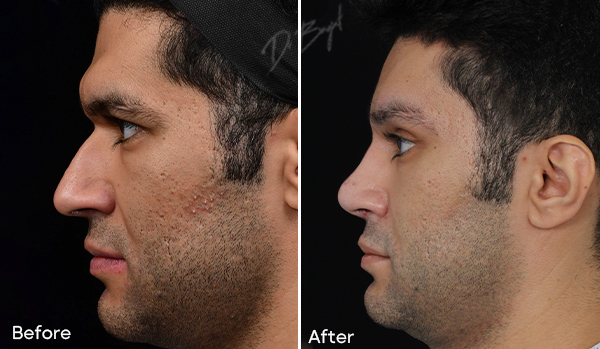
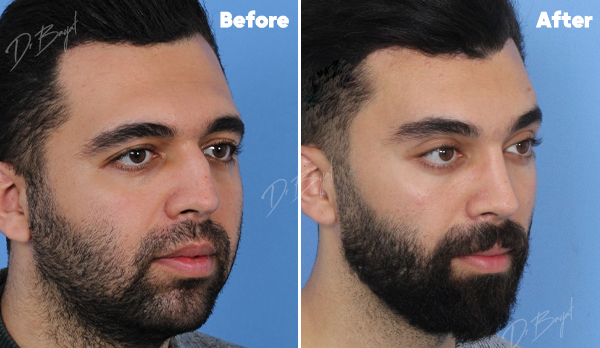
Cosmetic Nose Surgery (Rhinoplasty) in Iran
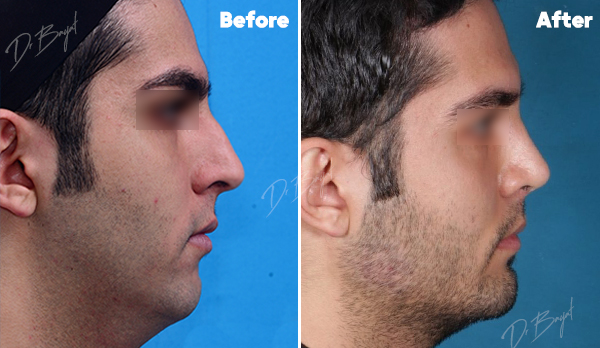
Nose reshaping, or rhinoplasty, is the most common cosmetic surgery in Iran. Many candidates for this procedure travel to Iran from the Persian Gulf region, the Middle East, and even Europe and the United States. Without a doubt, Iranian surgeons have become an international brand in this field, enjoying worldwide recognition. This reputation can be attributed to a combination of affordable costs, innovation, and the artistic skill of Iranian surgeons.
In this article, we aim to share important and practical points about choosing the best nose surgeon and to familiarize you with the stages, criteria, and features of a successful rhinoplasty.
What is Rhinoplasty?
In medical terms, rhinoplasty refers to cosmetic surgery and the correction of structural or aesthetic imperfections of the nose. Because the nose is positioned at the center of the face, its harmony with other facial features plays a major role in overall facial beauty.
The purpose of this surgery is to improve the external shape of the nose, create better balance with other facial features, and at the same time preserve natural breathing function.
During rhinoplasty, parts of the nose can be made larger or smaller, the angles of the nose can be adjusted, and with subtle changes, a significant effect on facial attractiveness can be achieved.
A very important point: In nose surgery, maintaining breathing function must always be the top priority. Cosmetic surgery should never lead to impaired natural breathing.
Contact us via WhatsApp for offline consultation.
How to Evaluate the Aesthetic Appearance of Your Nose?
There are several criteria for assessing the beauty of the nose, which help determine how well it harmonizes with the rest of the face. These standards may vary depending on gender, personal preference, cultural background, and ethnicity.
Differences in Beauty Standards Across Countries
For example, in Iran, nose reduction surgery is very common, while in some East Asian countries, many people seek procedures to enlarge the nose. Understanding these differences can help you make a more informed decision.
For a scientific analysis of your nose:
*Take clear, makeup-free, standardized photos of your face from both the front and the side.
*Make sure the photos are taken in natural light with your head held straight for more accurate evaluation.
*With the help of these photos and specialized software tools, you can even visualize a simulated result of the surgery.
Evaluating Nasal Aesthetics in the Frontal View
In this view, assess the harmony of your nose with other facial features. The most important proportions in the frontal view are as follows:
The width of the nose should be approximately equal to the distance between the eyes (about one-fifth of the facial width).
The length of the nose should be about 43% of the distance from the eye line to the chin. A small chin can make the nose appear larger.
Evaluating Nasal Aesthetics in the Profile View
In this view, the nose should be examined in relation to other features, particularly the forehead and chin, which play important roles.
*Nose-to-upper lip angle: 90–95° in men, and 95–110° in women.
*Nose-to-forehead angle: 115–135°. Modifying this angle alone can dramatically change the appearance of the nose.
*Nose-to-face angle: 30–40° (the ideal is around 36°).
*Nose-to-chin angle: 120–132°.
Contact us via WhatsApp for offline consultation.
Common Reasons for Undergoing Rhinoplasty
Some individuals seek rhinoplasty even if they already have a relatively attractive nose. In fact, rhinoplasty is mainly performed to correct the main imperfections of the nose. Through one or more of the following adjustments, rhinoplasty can enhance nasal aesthetics:
*Removal of a nasal hump (Humpectomy)
*Reducing (or, in rare cases, enlarging) the size of the nose in proportion to other facial features
*Narrowing a wide nose (suitable for thick-skinned noses)
*Correcting nasal deviation caused by previous fractures
*Reducing the size of wide or flared nostrils
*Refining nasal tip imperfections, such as a bulbous, wide, or drooping tip (Tip Plasty)
Why is Rhinoplasty So Common in Iran?
There are several reasons why the rate of nose surgery in Iran is significantly higher compared to the global average. The main factors include:
*In Iranian culture, facial beauty is valued more than body aesthetics.
*Many Iranian noses naturally have a dorsal hump, drooping tip, or protrusion from the face.
*The anatomical structure of Iranian noses, often with thicker skin (commonly referred to as “fleshy noses”), is different from that of Western ethnicities.
In Western countries, body aesthetics are generally considered more important than facial beauty. For this reason, cosmetic surgeries on various parts of the body (especially breast surgery) are more common there. In contrast, among Iranians, facial beauty is prioritized over body aesthetics. This is why the use of cosmetics in Iran is significantly higher than in Western countries, and facial cosmetic surgeries (particularly rhinoplasty) are much more widespread.
On the other hand, the appearance of Iranian noses often includes features considered less aesthetically pleasing, which are less common among Western ethnicities. Iranian noses (due to genetic and ethnic factors) typically have a dorsal hump, a drooping nasal tip, and a greater projection of the tip from the face. Altogether, these traits make the nose appear longer and larger. This characteristic has even become a frequent subject of satire in caricatures published in humor magazines (see image below).
Considering these two factors, Iranians are highly inclined to correct nasal imperfections through cosmetic nose surgery (choosing a desired nose shape). But this raises the question: Do Iranians and Westerners share the same preferences when it comes to the ideal nose shape?
Anatomical Differences Between Iranian and European Noses:
In most European countries, the majority of people are Caucasian, and their noses typically have relatively thin skin and subcutaneous tissue (commonly referred to as “bony noses”). As a result, only a thin layer of skin and tissue covers the nasal framework, making the width of the nose primarily determined by the bone and cartilage structure.
In contrast, Iranians often have slightly thicker skin and subcutaneous tissues (commonly referred to as “fleshy noses”), where skin thickness has a greater impact on the width of the nose (which also influences the choice of nasal shape in rhinoplasty).
Nasal humps are less frequently seen in Europeans. However, the presence of a hump is a characteristic feature of Aryan heritage. Overgrowth of the nasal septum often leads to the development of a dorsal hump and nasal deviation. Interestingly, in a study conducted by myself and colleagues in 2008—later published in the American Journal of Otolaryngology—we found that people in our country require septoplasty surgery to correct nasal deviation at younger ages compared to Western populations.
Another important factor is climate. Europeans generally live in relatively humid environments, which reduces nasal dryness and congestion. (Similarly, Iranians who travel to the northern regions of the country often notice that their breathing becomes easier.) Because of this, the nasal muscles responsible for moving different nasal structures are less frequently used. In Iran, however, the drier climate contributes to more frequent nasal congestion, which in turn requires greater use of nasal muscles. It is well known that nasal muscles can play an important role in the growth and shape of the nose.
Important Points to Consider Before Undergoing Rhinoplasty:
As general recommendations, you should keep the following in mind:
*Take photos of your nose from different angles so you have a clear idea of what changes you expect from the surgery.
*Assess the harmony of your nose with other facial features such as the chin and cheeks. For example, if the nose looks large due to deficiencies in other areas (such as a small chin or a very slim face), some degree of disharmony may remain even after surgery.
*Use simulation software to visualize the potential results. However, keep in mind that these simulations are not exact equivalents of the actual surgical outcome.
*Review the surgeon’s portfolio of previous cases to better understand their style and level of expertise.
For patients over 45 years old, it is advisable to consider facial rejuvenation before rhinoplasty.
The Best Age for Rhinoplasty:
cientifically, rhinoplasty can be performed after the completion of facial bone growth (around age 13 in girls and 14 in boys). However, the most recommended age is after 16 years old.
Choosing the Best Nose Surgeon in Tehran
Selecting the right surgeon is one of the most important decisions in the rhinoplasty process. It is worth noting that the biggest complication of rhinoplasty nowadays is surgeries performed by non-physicians or unqualified doctors. Worldwide, only three categories of surgeons are authorized to perform rhinoplasty:
ENT (Ear, Nose, and Throat) surgeons
Plastic surgeons
Oral and maxillofacial surgeons
Unfortunately, in Iran, general surgeons, general practitioners, operating room technicians, and others also perform these surgeries. To avoid choosing the wrong surgeon, I sincerely recommend the following three points:
1. Search the surgeon’s name on the website of the Iranian Medical Council to verify their degree and legal license.
2. Review long-term results of their surgeries (at least one year post-operation).
3. Avoid surgeons who perform a large number of surgeries in a single day, as this increases the risk of inaccuracy or even surgeries being performed by assistants or technicians.
If the outcome of the surgery is unsatisfactory, you usually have to wait one year before undergoing revision surgery. Moreover, the success rate of corrective rhinoplasty decreases with each additional operation.
Frequently Asked Questions Rhinoplasty
Is rhinoplasty possible for fleshy (thick-skinned) noses?
Yes, rhinoplasty for fleshy noses is performed at this center.
Can fleshy noses return to their original shape after surgery?
Yes, in thick-skinned (fleshy) noses, there is a possibility of relapse after rhinoplasty.
Can nasal polyps be corrected during rhinoplasty?
No, revision rhinoplasty is not performed.
Is nasal deviation (crooked nose) also corrected?
Yes, polyps can be corrected during the rhinoplasty procedure as well.
Can asymmetry of the nostrils be corrected?
Yes, the nasal septum deviation can also be corrected along with the rhinoplasty.
Will sinus problems be cured by prominent forehead surgery?
No, nostril asymmetry is not corrected during rhinoplasty.
Will there be numbness in the nose after surgery?
It is possible to resume exercising two months after rhinoplasty.
To request an analysis, please contact us.
- 021-22342978