
Every surgical procedure comes with certain side effects, and facelift surgery is no exception. Similar to many other surgeries, bruising may occur after the operation, most commonly around the eyes. Many people who are considering a facelift worry about the post surgery side effects, and this concern often makes them hesitant to proceed with the operation. In the text below, we will examine the complications of facelift surgery and how they are treated.
Hematoma After Facelift Surgery
One of the complications of facelift surgery is the development of a hematoma after the procedure. This condition occurs more often in individuals with high blood pressure or those who have blood clotting disorders due to taking medications such as aspirin or other anticoagulants. A hematoma can be treated by removing the accumulated blood clot. Mild cases may not require any treatment at all, as the clot may be absorbed on its own.
To prevent hematoma formation, you should stop taking anticoagulant medications under your doctor’s supervision and avoid consuming any herbal medicines, teas, or anticoagulant drugs for two weeks before the surgery, as some of them have effects similar to aspirin. However, you should continue taking your blood pressure medications, even on the day of surgery. If you do not have high blood pressure but have a family history of it, it is recommended to check your blood pressure daily for a week before the surgery to ensure that it is within a normal range.

Postoperative Pain Level After Facelift Surgery
Like any other surgical procedure, you may experience some degree of pain in your face after a facelift surgery, which is generally tolerable for most individuals. This is completely normal, and there is nothing to worry about. In most cases, the pain subsides with the use of painkillers, and after about three days, you will notice a significant decrease in discomfort.
Note
Severe pain after a facelift, pain that is intolerable, is not normal. If you experience such a condition, you should immediately inform your doctor or medical team.
Degree of Skin Numbness After Facelift Surgery
Due to facial swelling, you may experience some numbness in your face. Fortunately, this numbness helps reduce the amount of pain you feel after facelift surgery, meaning you may not need many painkillers. As the swelling subsides, the numbness will gradually resolve on its own.
Irregularities After Facelift and Neck Lift Surgery
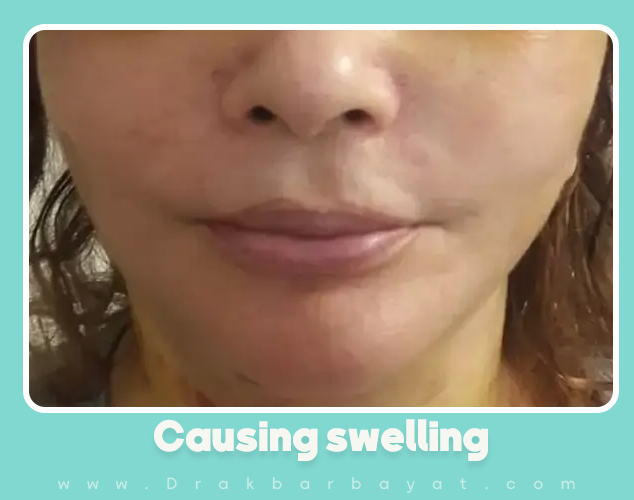
In the first few days after the operation, due to swelling, you may feel some irregularities in your face for a while. Most of these irregularities resolve on their own without any intervention. In individuals who undergo PAAG gel removal at the same time as the facelift, these irregularities may persist longer due to the complications associated with the gel.
Fortunately, most postoperative irregularities are not visible and are only noticeable when the person touches their face ,feeling firm or uneven areas in certain regions. These firm spots are caused by tissue swelling and will disappear once the swelling subsides.

Asymmetry After Surgery
Due to swelling around the nerve branches and generalized soft tissue swelling in the face, some asymmetry may be noticeable after the operation. Some of these asymmetries are visible in a static state (when the face is at rest), while others appear only during dynamic facial movements such as smiling, speaking, and so on. These asymmetries are more commonly seen around the lips and eyes and, in most cases, improve gradually over time without the need for any specific treatment. Sometimes, prescribed massage techniques or physiotherapy can be very helpful in resolving these issues.
Contact us for consultation
Seroma After Facelift Surgery
3 Uncommon Complications in Facelift Surgery
A seroma is essentially a collection of serous fluid that may accumulate beneath the tissues after surgery, appearing as a fluid filled sac or cyst under the skin. Once the skin adheres again to the underlying tissues, seromas no longer form. During the few days it takes for this to happen, it may be necessary to drain the seroma with a syringe. To prevent the fluid from reaccumulating, a gentle compression dressing may be applied over the surgical area.
Fortunately, seroma and hematoma are among the most common complications of facelift surgery, and both are easily treatable, leaving no lasting effects after proper management.
Skin Necrosis
Skin necrosis, or the loss of skin in the operated area, is a rare complication that occurs more frequently in smokers. Most cases of necrosis appear at the incision site behind the ear and occasionally at the incision in front of the ear. Fortunately, in the majority of cases, the affected area is very small and heals well with proper treatment. Since skin necrosis is more commonly seen in smokers, most surgeons strongly recommend quitting smoking before undergoing a facelift. Necrosis is also more likely to occur when the facelift involves only the superficial layers of the face (skin only lifting).
Fortunately, when a deeper plane facelift is performed, lifting the deeper facial tissues, the risk of skin necrosis is lower compared to skin only lifting. Individuals who have PAAG gel in their face also have a higher risk of developing skin necrosis, similar to smokers. Excessively tight dressings can also lead to skin necrosis and should be avoided. Treatment typically involves wound care and the use of topical ointments, and in most cases, the skin eventually returns to a normal appearance.
Contact us via WhatsApp for offline consultation.
Risk of Sensory Nerve Injury
Sensory nerves may be injured during facelift surgery, which can lead to prolonged numbness in parts of the face. The likelihood of this complication is very low, and with careful surgical technique, it can be easily prevented.
It is important to note that due to postoperative swelling of the face and neck, mild numbness in the skin of these areas is normal and temporary. This numbness resolves on its own as the swelling subsides and should not be considered a complication, as it is a natural, transient change after surgery. Injury to the sensory nerves does not affect the appearance of the face; it is only noticeable to the patient as a sensation of numbness.
Risk of Motor Nerve Injury
Motor nerve injury can occur in deep plane facelifts, but in facelifts where only the skin is lifted and the surgeon does not enter the deeper layers of the face, this complication does not occur at all. Fortunately, this is why surgeons who do not have sufficient experience with deep plane facelifts often perform only superficial facelifts. If you, the reader, undergo a superficial facelift with any of my colleagues, you can be confident that this complication will not occur.
Now, the important question is: What is the likelihood of motor nerve injury in the hands of experienced surgeons performing deep plane facelifts? An experienced surgeon can perform several thousand deep plane facelifts on patients who have no history of facial surgery or interventions (such as filler injections) without a single case of permanent motor nerve injury.
Contact us for consultation
Who Is at Higher Risk of Facial Motor Nerve Injury
Fortunately, facial motor nerve injury during facelift surgery is very rare in patients without prior interventions. However, individuals who have a history of facial surgery (e.g., salivary gland surgery near the jaw) or any prior manipulation of the deep facial tissues such as complications from filler injections, PAAG gel injections or removals, thread lifts, or other similar procedures are at higher risk of motor nerve injury.
In such cases, the surgeon’s skill in preventing motor nerve damage is extremely important, and it is essential for patients seeking aesthetic procedures to be aware of this risk.
Likelihood of Scar Formation at the Surgical Site After Facelift Surgery
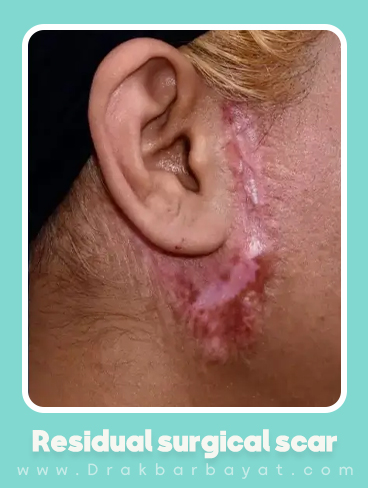
One of the main concerns for patients undergoing surgery is whether the surgical incision will be visible afterwards. Since individuals seeking a facelift aim to enhance the beauty of their face, they are often particularly sensitive to this issue. Fortunately, in deep plane facelifts, because the skin is under less tension, the likelihood of noticeable scarring is very low. Various techniques can also be used to improve the appearance of surgical scars.
Sometimes, the incision heals so well that it becomes almost impossible for an ordinary person or even a medical professional to detect the surgical mark. If a scar does remain after a facelift, it can be improved with medical treatments, non surgical methods (such as laser or RF therapy), or surgical scar revision.
The chance of visible scarring is much higher in patients who undergo superficial facelifts (skin only lifting), whereas in those who have a deep plane facelift, the likelihood of noticeable scars is significantly lower.
Risk of Infection After Facelift Surgery
Fortunately, due to the excellent blood supply in the face and neck, the risk of infection after facelift surgery is very low and is rarely observed. Theoretically, individuals with a history of PAAG gel injections or other manipulations in the facial area may have a slightly higher risk of developing an infection.
Ear Deformity After Facelift Surgery
In some individuals, changes in the appearance of the ears may occur after facelift surgery. One of these changes is the reduction or flattening of the tragus (the small protrusion in front of the ear canal). Most people do not notice this change, so it is generally not considered a complication. However, it can be partially prevented, and if it occurs, it can be corrected.
Sometimes, deformities of the earlobe may be observed after facelift surgery. These changes can include adhesion of the earlobe to the face, elongation of the earlobe, or enlargement of the earlobe. Earlobe deformities, like surgical scars, result from skin tension. Usually, these two complications (surgical scars and earlobe deformity) appear together in individuals who undergo superficial facelifts (skin only lifting).
If such a complication occurs, similar to scar revision, the earlobe deformity can be corrected surgically.
Hair Loss Around the Surgical Incision After Facelift Surgery
At the site of the surgical incision, hair follicles may be damaged, leading to a few millimetres of hair loss. In most cases, this hair loss is temporary, and within a few weeks to months, the hair follicles regrow, restoring the area. Preventive measures have been developed that are highly effective. In modern surgical techniques, special attention is given to the hair follicles, which significantly reduces the likelihood of this complication.
In the past, hair loss was more common, particularly affecting the temple area and behind the ears. With current techniques, these areas usually retain a natural hairline and hair density. For individuals who experienced hair loss in the surgical area years ago, hair transplantation is a very effective treatment, providing a natural appearance. Repeat surgery can also help correct previous hair loss and can be considered as an option for those planning a second facelift.
This section aimed to review the complications of facelift surgery. If you are considering a facelift, it is also recommended to read the section on postoperative care for facelift surgery.
Very Rare Complications of Facelift Surgery
Displacement of Hairline in the Temple Area After Facelift Surgery
This complication was more commonly observed in facelifts performed in the past. Today, with precise preoperative planning and adherence to surgical standards, incision sites are carefully selected to prevent displacement of the hairline. Fortunately, individuals who have previously experienced this issue, it can be corrected with hair transplantation.
Injury to Facial Nerve Branches After Facelift Surgery
The most serious complication of facelift surgery is injury to the facial motor nerves. During any facelift procedure, there is a potential risk of damage to various branches of the facial nerve. Fortunately, in the hands of an experienced surgeon, the likelihood of this complication is extremely low almost zero. Therefore, facelift surgery should only be performed by a physician who is highly skilled in this procedure.
In individuals who have previously undergone a facelift or any other facial surgery (such as PAAG gel removal), the risk of facial nerve injury is higher than in average patients. A skilled surgeon uses multiple techniques to prevent nerve damage in such cases. Remember, if you are considering a repeat facelift, entrust your surgery only to the most experienced surgeons, and be sure to review their facelift surgery photo gallery before making a decision.
Dr. Akbar Bayat
Holds European Board Certification in Facial Plastic Surgery