
facial gel removal
facial gel removal Results
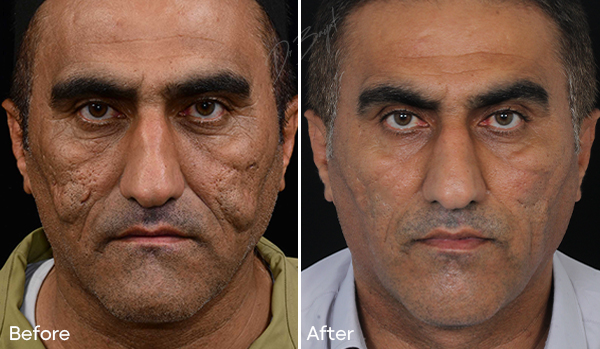
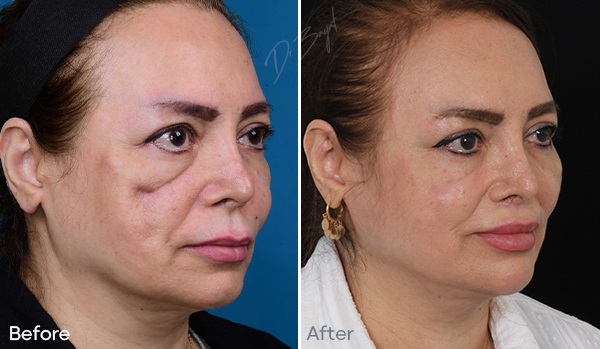
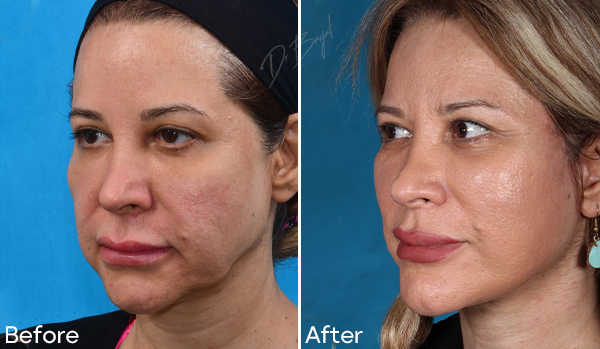
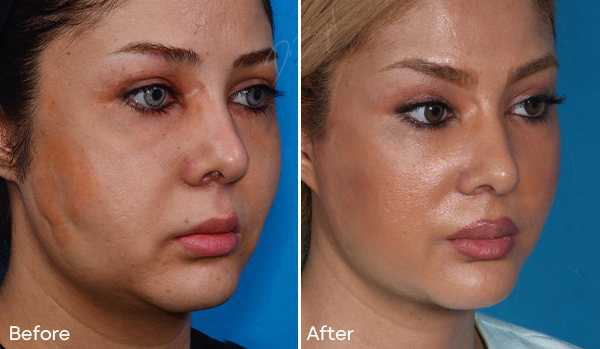
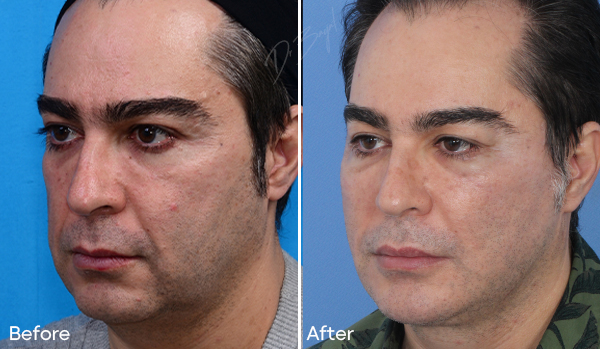

When is facial gel removal performed?
While the goal of gel injections is to enhance the beauty of the face, like any other beauty treatment, there are rules and standards for safely and securely injecting gel. Any negligence in following these standards can only harm your beauty. If you have experienced side effects from a gel injection, don’t worry. There are methods available to treat these side effects, and gel removal and corrective procedures for any complications from gel injections are among these methods.
Contact us via WhatsApp for offline consultation.
The surgeon needs the following information to treat gel-related complications.
Is identifying the type of gel effective in the treatment method?
Identifying the type of gel is very important in choosing the treatment method (medication-based or surgical). Not every gel-related complication needs to be treated with gel removal or surgery. Many complications can be resolved without surgery, using only medical treatments. Non-surgical treatments are especially recommended for temporary gels.
Amount and location of injected gel
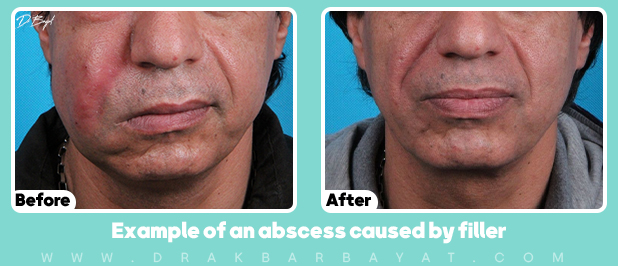
During routine examinations and ultrasounds of the area where the gel was injected, sometimes images appear that require interpretation and accurate decision-making, which depends on knowing the location and amount of the injected gel. For example, if the volume of a cyst seen on ultrasound is larger than the volume of the injected gel, we understand that the body has reacted to the gel, and during gel removal, there may be a risk of abscess or infection.
Time elapsed since gel injection
Sometimes, patients, due to their own hasty judgment, request gel removal immediately after facial gel or lip gel injection. In such cases, it should be considered that gel removal must be performed under the best possible conditions to ensure the physician’s accuracy. When the gel has been recently injected, the tissues are excessively swollen, which prevents the exact location of the gel from being determined. This condition is not suitable for gel removal, and it is necessary to wait until the tissue edema subsides.
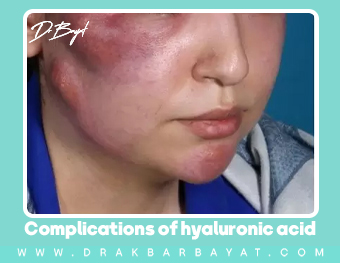
Additionally, in cases of acute infection where the tissues are affected by cellulitis and severe inflammation, any manipulation for lip or facial gel removal is not only ineffective but can also worsen gel complications and damage the affected tissues.
After a thorough examination and ultrasound of the injection site, reach a reasonable and scientific decision with your doctor regarding the method of lip or facial gel removal and the treatment of any resulting complications. For better decision-making, it is necessary to understand the gel removal methods and how to manage the complications.
Contact us via WhatsApp for offline consultation.
Methods of Gel Removal
1. Using Enzymes to Dissolve the Gel
This method is effective only for gels that contain hyaluronic acid. In this procedure, hyaluronidase ampoules are prepared and injected into the area where the gel was placed. By breaking down hyaluronic acid molecules, the enzyme dissolves the gel.
2. Treating Cysts (Compressible Cysts)
When the injected gel forms cysts in your face, you may feel soft, compressible masses under the skin. These cysts contain liquid or semi-solid material. Sometimes they move from one place to another, and due to connections between adjacent cysts, the contents may shift from one cyst to another when pressure is applied. By touching the area, you can often feel lumps that slightly change shape when pressed. Ultrasound can identify their location and depth.
Treatment Method:
Based on the ultrasound images, it can be decided whether the gel should be removed through the mouth (intraoral) or through the skin.
These cysts indicate the body’s reaction to the gel. During gel removal, in addition to the gel, some secretions—sometimes pus-like—may be seen. Many people who have used PAAG gel develop such cysts in their face.
Important Note: Washing and irrigating the emptied cavity is an important part of the treatment, as it helps remove residual gel more effectively. Be sure to ask your doctor to thoroughly irrigate the area after gel removal.
Small incisions of 1–3 mm are very effective for removing these types of gels. In most cases, these incisions do not require suturing and heal completely, leaving no visible marks.
Deeply located gels are better removed from inside the mouth, while gels closer to the skin surface are better removed through small skin incisions.
Ultrasound imaging and precise examination are crucial in choosing the appropriate gel removal method.
Treatment of Firm, Solid Masses (Solid)
Sometimes after gel injection, you may feel firm, solid masses in your face that cause facial deformity. The appearance of this condition is somewhat different from cystic reactions. Their excessive firmness gives them a benign tumor-like appearance. Depending on the injection site, these masses may be very superficial or very deep. On ultrasound, there are some similarities between this reaction and cystic reactions, but with careful assessment, the two can be easily distinguished. Differentiating between them is important because it helps the physician choose the appropriate gel removal method.
Treatment Method:For very superficial, small masses (submucosal or subcutaneous), the needle-aspiration method can be used. After complete local anesthesia, the area is treated, and in most cases, there is no need to wash or irrigate the injection site afterward. Massage may help in this method.
Important Note:Improper use of the needle method for deeper or larger masses is not only ineffective but may also worsen the situation by causing the gel to spread or making future removal procedures more difficult.
For deeper and firm masses caused by gel injections, the treatment approach is similar to the method used for cyst removal.
Treatment of Uniform and Excessive Swelling Caused by Gel Injection
Sometimes, gel injection in the face can lead to uniform and excessive swelling. This condition is especially seen with gels that stimulate collagen production, causing an increase in tissue volume. Most gels made from polymerized molecules fall into this category. Using these types of gels in certain areas of the face is dangerous and prohibited.
Note: Collagen-stimulating gels are not suitable for injection into the lips or under the eyes and should only be injected into deeper facial areas.
These gels cause changes in the tissues that are visible on ultrasound, allowing them to be distinguished from other types of gels.
Treatment Method:As much as possible, manipulation of these complications and attempting to remove the gel should be avoided. However, in specific cases, gel removal can be performed cautiously. Irrigation of the area is very helpful.
For removing these gels, it is better to use several very small incisions rather than large ones. One should never attempt to remove all of this type of gel in a single session, as doing so will inevitably damage the surrounding tissues and result in deformities.
What Should Be Done About Irregularities Remaining After Treating Gel Injection Complications?
After treating gel injection complications, some unevenness often remains in the area. If these irregularities are mild or subtle, no treatment may be necessary. However, in more severe cases, they can be corrected using fat grafting, facial implants, or in some situations, safe and approved dermal fillers. Among these options, fat injection is the safest and typically provides the best results.
Facial Gel Removal Using the Facelift Method
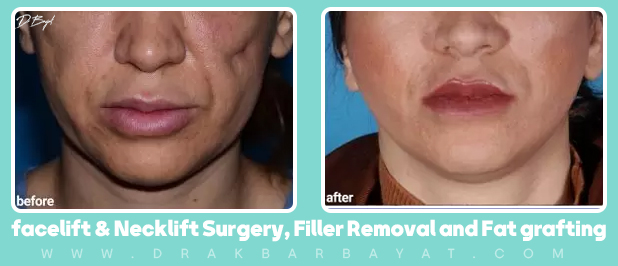
Gel removal through the facelift technique is used in cases where other methods have failed to remove the gel, or when severe irregularities and subcutaneous adhesions remain after previous gel removal attempts.
In this method, not only is the gel removed from various layers of the face and the injection site thoroughly irrigated, but fat tissue is also used to fill the depressions caused by earlier gel removal. In cases where the skin in the affected area has been damaged, the damaged skin can be replaced with healthy surrounding skin.
Regarding the cost of treating gel-related complications, it should be noted that individuals who had gel injections more than five years ago, those with repeated gel injections (even if less than five years), or individuals who have had multiple types of gels injected (even if less than five years), will require an ultrasound. An ultrasound must first be performed to determine the number of removal points, and the costs will be calculated accordingly.
Does One Session of Gel Removal Completely Eliminate the Complications?
It depends on the type of gel and whether it is removable. The surgical team at Limon Cosmetic Surgery Center aims to remove the gel completely in a single procedure whenever possible, because fibrotic areas cannot be removed, and these can instead be treated with injectable therapies rather than surgical removal.
Post-operative follow-up is scheduled three months after the gel removal surgery.
If the gel is removable, the removal will be performed, and the cost of cleansing will only include the disposable materials used.
Important Note:This method is considered the final treatment option for gel removal (and for managing its severe complications). Although many gel removal techniques can be performed by various practitioners (general physicians, dermatologists, general surgeons, etc.), it is strongly recommended that gel removal using the facelift method be performed only by an experienced surgeon skilled in both gel removal and facelift procedures.
Before surgery, a complete ultrasound evaluation must be performed to accurately determine the exact locations of the gel.
Frequently Asked Questions about a facial gel removal performed
1. Is gel removed 100%?
In the open method, it is possible to remove the gel along with the cysts surrounding it, which allows for a higher percentage of gel removal.
In the closed method, only the contents of the cyst around the gel can be drained through a small incision.
2. Is there a chance of recurrent infection after PAAG gel removal?
We always emphasize that after PAAG gel removal, you must consult with us before undergoing any cosmetic procedure.
3. Is there a risk of nerve damage during PAAG gel removal?
This depends on the physician’s skill and experience. That’s why we strongly recommend that PAAG gel removal be performed by a doctor with many years of experience in this specific procedure. You can also consult with us.
4. Why does ultrasound still show traces of gel after removal?
Gel removal is never 100%. In some patients who undergo closed removal, cysts containing gel inevitably remain, and these appear as PAAG gel on ultrasound. However, an experienced doctor can determine the real situation by examining the area.
5. How long after gel removal can gel be injected again?
This depends on the doctor’s evaluation and will be determined during examination.
6. Can silicone gel be removed?
The treatment approach for silicone gels is different from PAAG gel. The method depends on the area of the face where the gel is located, and the appropriate technique will be determined by the doctor.
7. What causes fibrosis and granuloma?
Sometimes they occur due to unnecessary manipulation, and sometimes due to the tissue’s natural reaction to the gel, resulting in fibrosis or granuloma formation.
8. Can irregularities occur after gel removal?
Yes, irregularities may occur.
9. Is fibrosis treatable?
In certain cases, fibrosis may be treatable with non-surgical methods after proper examination.
10. How long after gel removal can fat grafting be performed?
Usually, fat injection can be done 3 to 6 months after gel removal, depending on the doctor’s assessment.
11. Is the open method or closed method better for gel removal?
The appropriate method depends on the area where the gel is located. In general, the open method allows removal of both the gel and the cysts containing it.
12. Is Aquamid the same as PAAG gel?
Aquamid is a type of PAAG gel. However, after removal, it causes more swelling and is not as easily removable as PAAG.
13. What is the best method to correct irregularities after gel removal?
If removal is performed using the open method combined with facelift, some irregularities can be corrected using grafting techniques, and if needed, fat injection or filler can be added later.
If gel removal is done using the closed method, a combination of fat injection or filler may be recommended.
14. During gel removal combined with facelift, can the gel in the nasolabial folds and under the eyes also be removed?
Because access to these areas is limited, gel removal in these regions can only be done partially. If necessary, additional localized removal can be performed after the facelift.
To request an analysis, please contact us.
- 021-22342978